Chaitanya P.
Managing Director"Master the Media with Maestra"
The best side of this product is auto subtitling. And most importantly, it supports multiple languages.
Read full reviewGenerate an Italian voice over for any video with AI dubbing.
MP4, MOV, AVI, MP3, WAV, SRT…
Sign up to export your dubbed file.
Sign up nowYouTube, Vimeo, Google Drive, or a direct media URL
Sign up to export your dubbed file.
Use your microphone
Sign up to export your dubbed file.
Live translation from spoken audio, transcribed and translated as you speak.
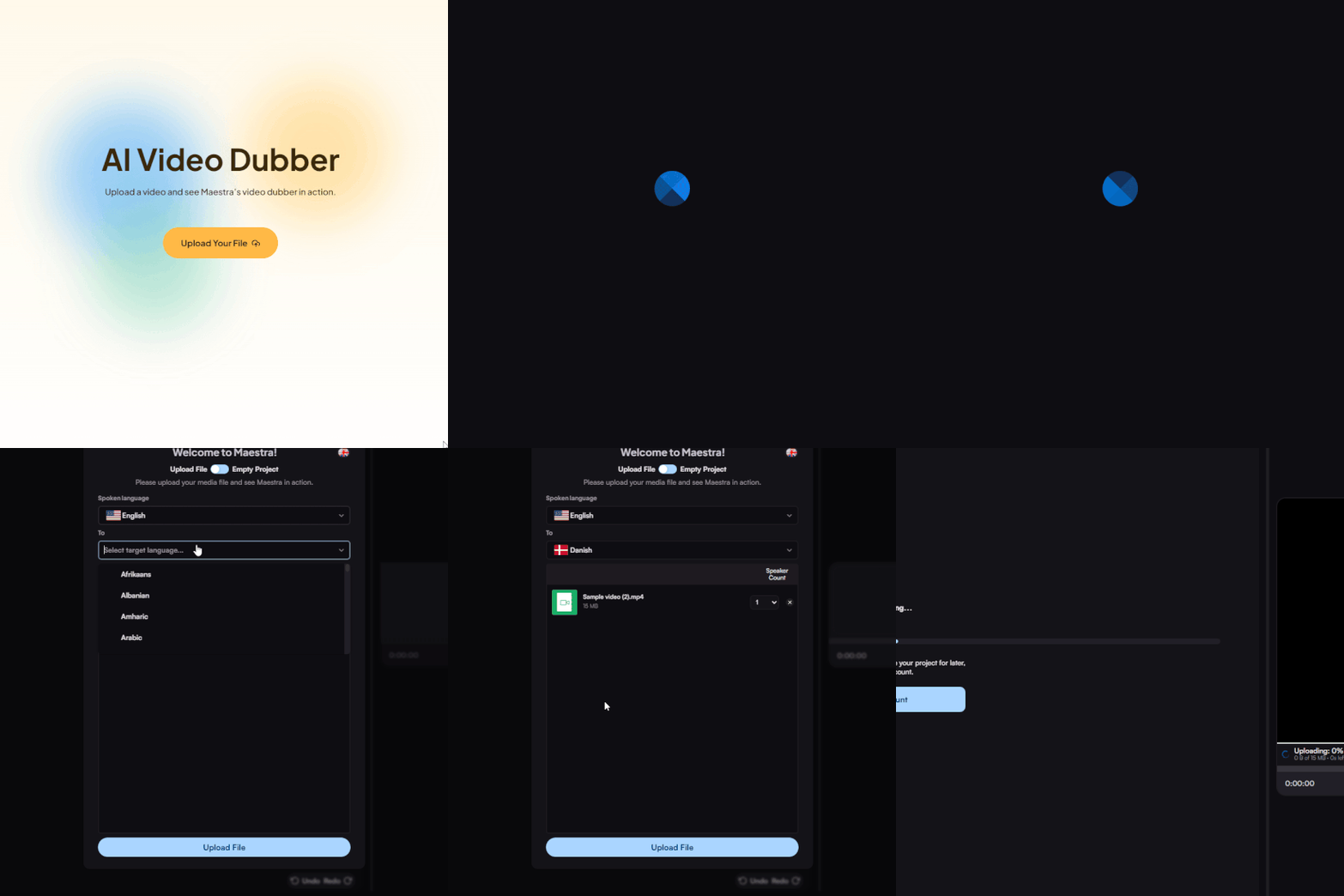
Upload a video file from your device or paste a link from YouTube or another platform. Choose your source language and set Italian as the target.
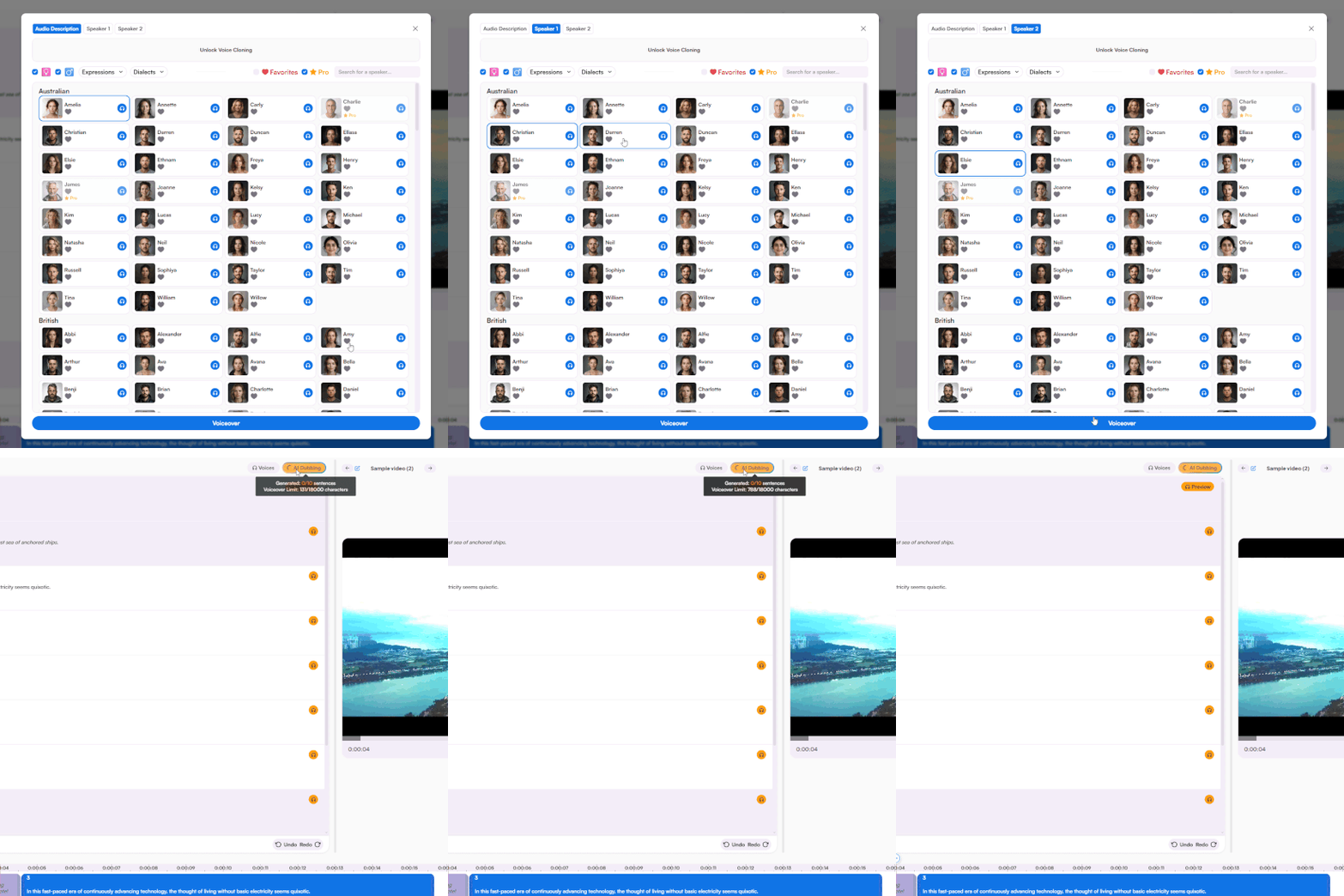
Choose an Italian AI voice for each speaker or clone the original voice. Generate the voiceover, then fine-tune anything you need in the editor.
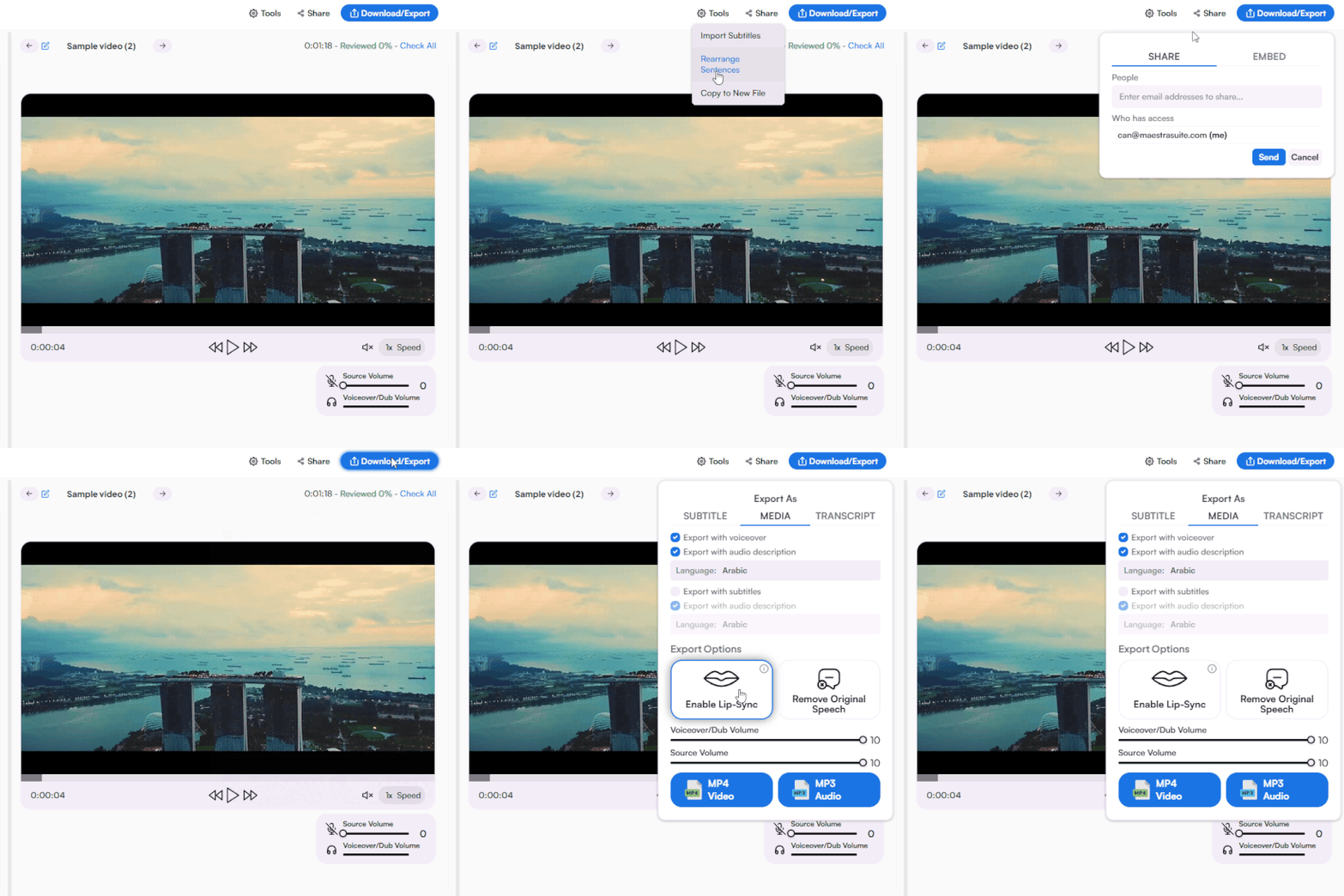
Download the dubbed video as MP4, export Italian subtitles in your preferred format, or share the project with your team for a final review.
Yes. You can generate an Italian voiceover for a portion of your video to evaluate the AI voices, accuracy, and export quality. For full access, you can check available plans on Maestra's Pricing page.
Upload your video or paste a link, then set Italian as the target language. Once Maestra transcribes and translates the dialogue, you can assign an Italian AI voice to each speaker and generate the dub. From there, refine any line in the editor and export when ready.
Most videos are processed and dubbed in a matter of minutes. Longer files take a bit more time, but the turnaround is still far shorter than working with Italian voice actors, which typically involves casting, scheduling, and post-production.
Maestra uses advanced speech synthesis to produce Italian male and female voice overs that sound close to native speakers. You can adjust any line in the text editor, change the delivery style, or use the AI rewriting feature to refine the translation for a flawless result.
Yes. AI voice cloning captures the original speaker's tone and delivery and reproduces them in Italian. It's a good fit for creators, educators, and brands that want their Italian content to feel like a natural extension of the original rather than a separate production.
Yes. Maestra's AI lip sync feature matches the Italian audio to the speaker's on-screen mouth movements. This is especially useful if your video features a presenter, instructor, or anyone speaking directly to the camera.
Yes. All Italian AI voices on Maestra are licensed for commercial use, covering advertising, e-learning, branded video, and customer-facing content.
Yes. Playback speed is adjustable in the editor, and you can also set characters per second for more precise timing control over individual lines.
Yes. You can enable subtitles during export and they'll align automatically with the Italian dubbed audio. You can also export them as a standalone SRT, VTT, or SBV file if needed.
Maestra supports MP4, MP3, WAV, MOV, and many more. You can export your dubbed Italian video or audio as MP4 or MP3, and download subtitles in SRT, VTT, or other formats. For a full list of file formats, you can visit Maestra's Supported Formats page.
Yes. You can export the dubbed Italian audio as a standalone MP3, which can be useful for voiceover reels, narration tracks, audio guides, podcasts, or any audio-only workflow.
Yes. Files are encrypted in transit and at rest and never shared with third parties or used to train AI models. For full details, you can see Maestra's Privacy Policy.
Yes. If you don't have a video file, Maestra's Italian text to speech tool lets you paste a script and generate spoken Italian audio directly. No upload needed.
Maestra combines AI translation, lifelike Italian voices, voice cloning, lip sync, and subtitle generation in one platform. There's no need to juggle separate tools for each step. Everything from upload to export runs in a single workflow.